
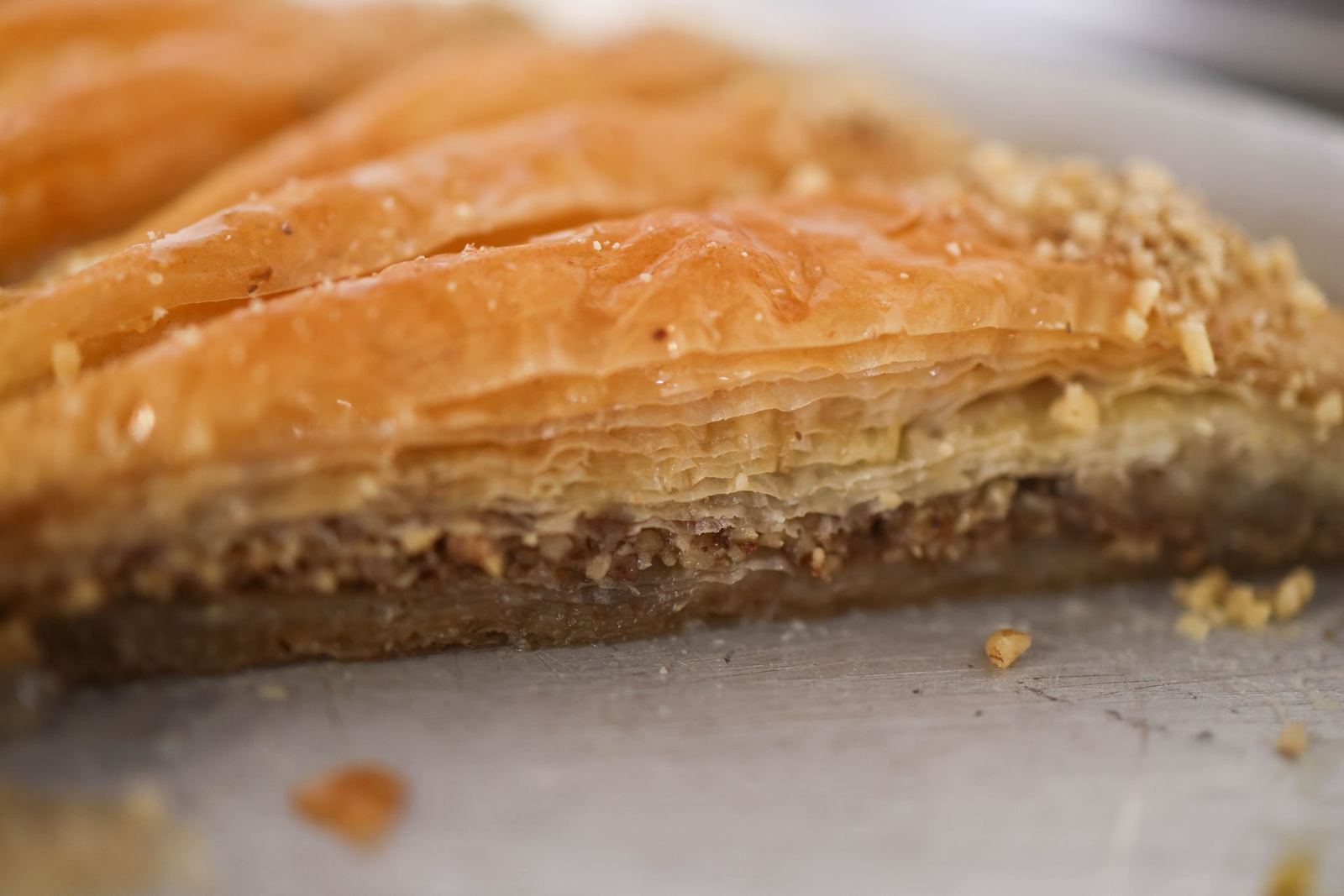
What sets apart Antep baklava, the first Turkish product registered in the European Union in 2013?
In 2013 Antep baklava became the first Turkish product registered as a Protected Geographical Indication (PGI) in the European Union. This means the name 'Antep baklava' or 'Gaziantep baklava' may only be used for baklava produced in Gaziantep under set conditions and by a defined method. So what makes it different? The answer lies in four ingredients and the hands that bring them together.
1. Green Antep pistachios
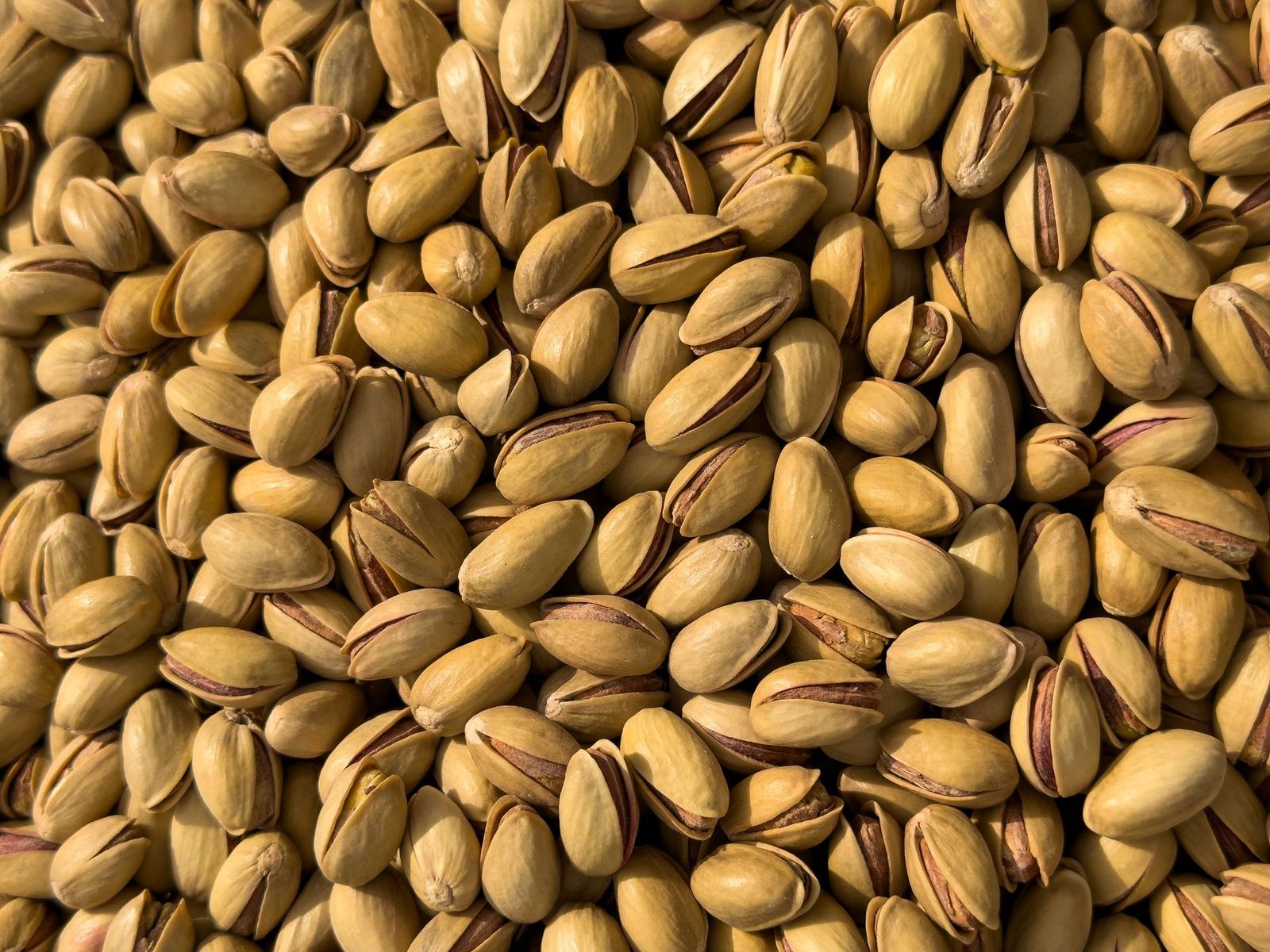
The Antep pistachio is itself a geographical indication. The pistachio used in baklava is 'boz iç', harvested in early August before it is fully ripe, while the shell is still pinkish red. Early-harvest kernels are bright green, with an intense, slightly resinous aroma. Late-harvest snacking pistachios with split shells have yellowish kernels and do not give baklava the same colour. Green kernels are expensive: about four kilograms of pistachios in shell are needed for one kilogram of green kernels.
2. Clarified butter
Traditional Antep baklava uses clarified butter, not ordinary butter. Clarified butter is made by melting butter and removing its water and milk solids; the most sought-after is made from sheep's milk in Şanlıurfa. It does not burn at high temperatures, crisps the pastry and gives a distinctive aroma. Baklava made with margarine or vegetable oil leaves a greasy feeling in the mouth.
3. Hand-rolled pastry
A tray of Antep baklava has about 40 layers of pastry. The dough of flour, egg, water and a little salt is kneaded, divided into balls and rolled out with a thin rolling pin, using starch. They say you can read a newspaper through a well-rolled sheet. The thinness of the pastry decides both the lightness and the crispness of the baklava.
4. Syrup and cream
The syrup is made of sugar, water and a few drops of lemon. In the Antep method, lukewarm syrup is poured over baklava fresh from the oven, so the lower layers absorb it while the top layers stay crisp. The semolina milk cream brushed between the layers adds both moisture and a soft texture.
The role of the master
Two masters using the same ingredients can make different baklava. The thinness of the pastry, the size of the chopped pistachio, the oven temperature and the moment the syrup is poured are decided in a matter of seconds. That is why in Gaziantep baklava making is still learned through years of apprenticeship.
How to recognise good Antep baklava
- A green layer of pistachio is clearly visible in the cross-section.
- The top layers are crisp and rustle when you bite.
- No syrup or fat pools at the bottom of the plate.
- The taste that lingers is pistachio, not fat.
Related Posts
Antep Baklava
Green Pistachio Kernels: Why Harvest Early in August?
Baklava's green colour comes not from dye but from the harvest calendar. The journey from the orchards to the workshop.
Read more