
Baklava's green colour comes not from dye but from the harvest calendar. The journey from the orchards to the workshop.
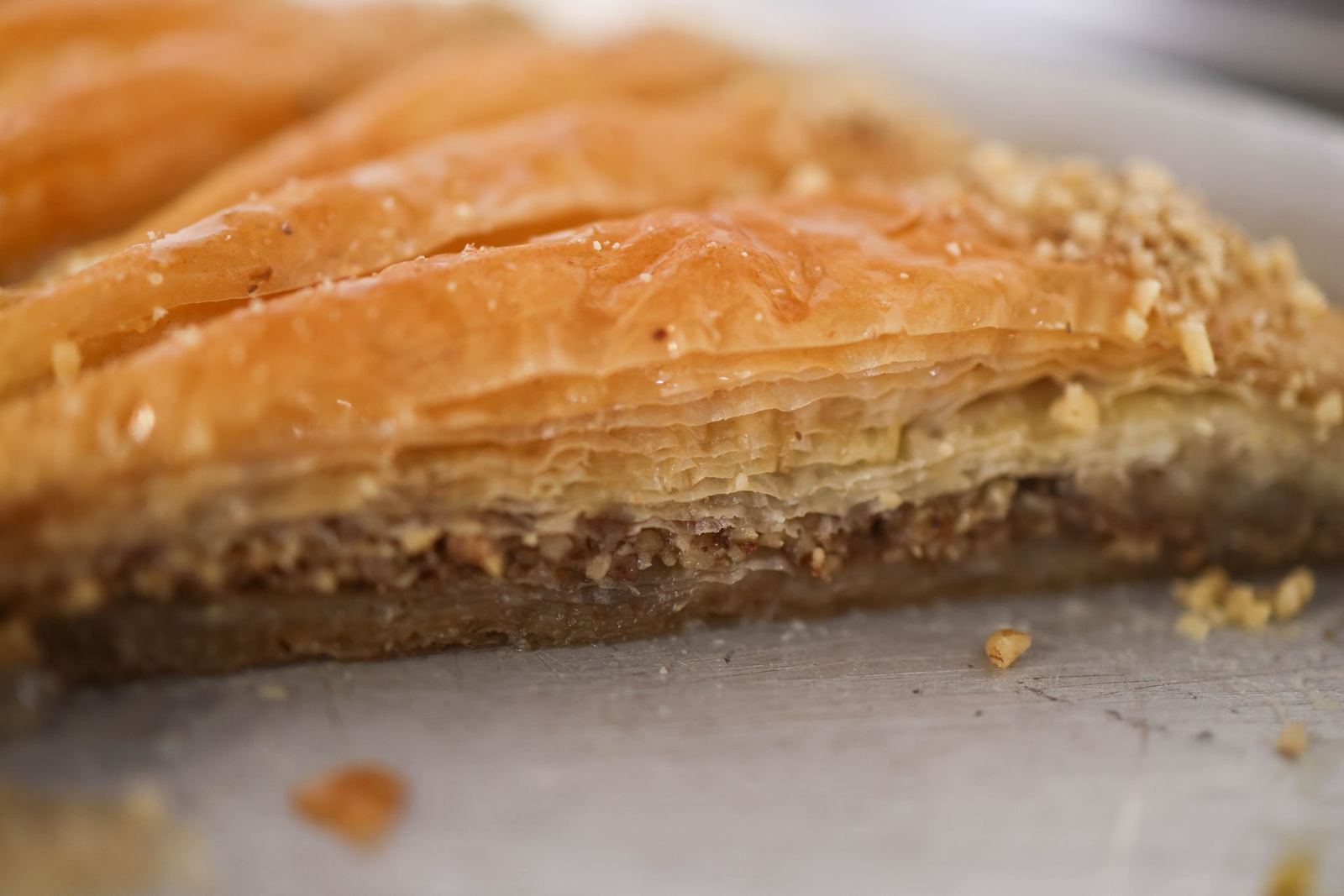
The bright green layer you see when you cut Antep baklava is its most expensive and most important ingredient. The colour comes not from dye or any special process but from when the pistachio is harvested. In the first weeks of August each year, the 'boz iç' harvest begins in the pistachio orchards of Gaziantep.
What is boz iç?
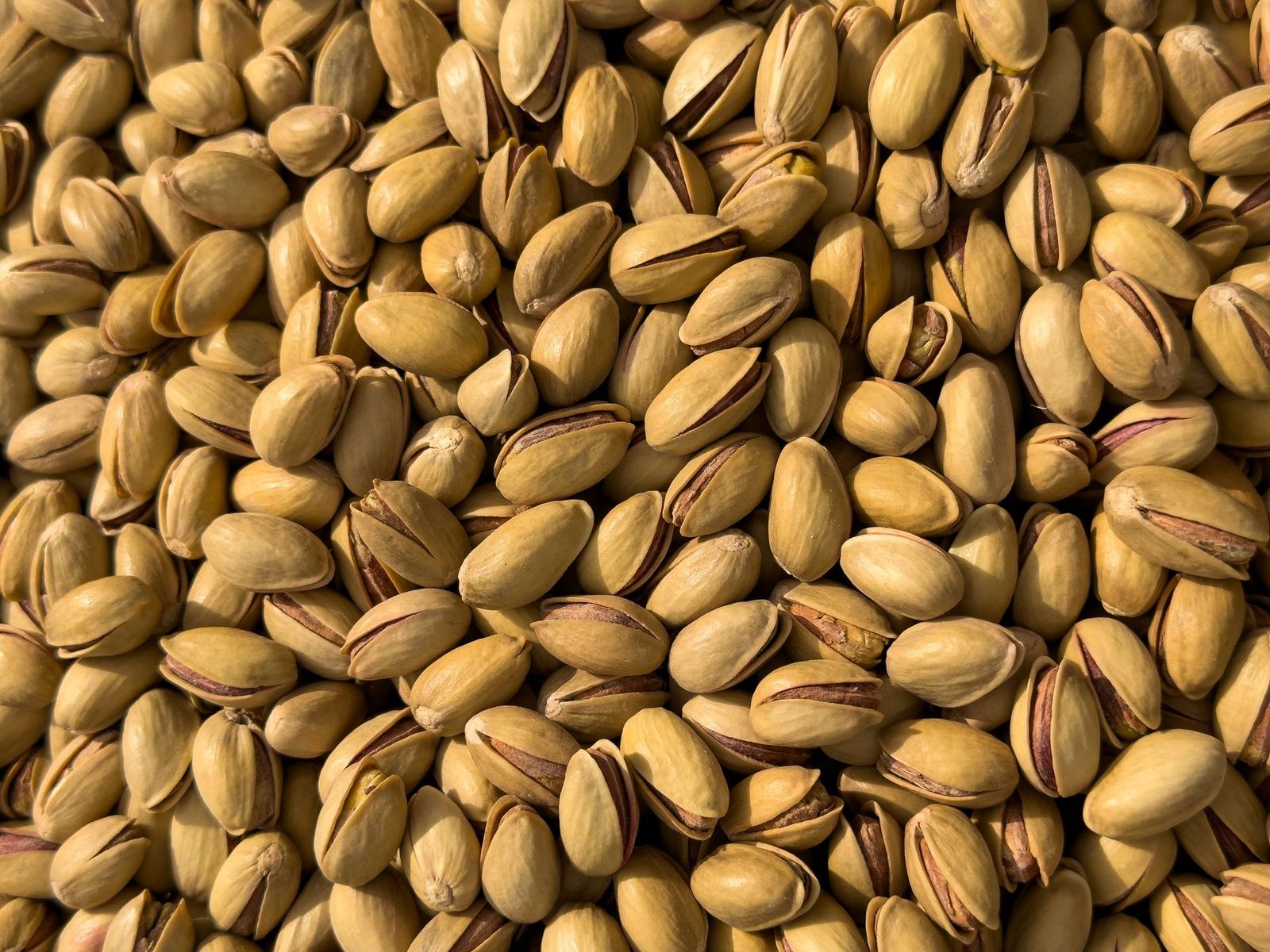
As the Antep pistachio ripens on the tree, its kernel turns from green to yellowish, its oil content rises and the shell splits. Snacking pistachios are picked at this full ripeness in September. Pistachios for baklava are harvested much earlier, while the shell is still closed and pinkish red. The kernel of this early harvest is bright green and is called 'boz iç'.
Why is it expensive?
Because early-harvest pistachios have not filled out, the kernels are small and the yield is low. About four kilograms of pistachios in shell are needed to get one kilogram of boz iç. And as the shells have not split, the nuts are soaked and cracked one by one and their inner skins removed; this relies largely on handwork.
Boz iç in our workshop
Every August we choose our pistachios ourselves from growers in Nizip, Yavuzeli and Araban, visiting their orchards. The cracked and cleaned kernels are stored in vacuum packs in a +4 °C cold store, so we keep the same colour and aroma all year. Every purchase batch is tested for aflatoxin.
How is the pistachio chopped?
For baklava, pistachios are not ground into a fine powder; coarse pieces shape both texture and appearance. Square baklava uses medium-coarse pieces, dolama and twists use whole pistachios and katmer uses finely ground pistachio.
Why does the colour sometimes darken?
Over time boz iç oxidises with light and heat and turns olive green. Leaving baklava too long in the oven also darkens the pistachio. Baklava showing bright green pistachio in cross-section means both fresh pistachios and the right baking time.
A word of caution
News stories occasionally report colourings being used to boost the green look of baklava with little pistachio. Under the Turkish Food Codex, any colouring used in baklava must be stated on the label. Remember that the natural green of pistachio is slightly matt, while coloured pistachio has a fluorescent shine.
Related Posts
Antep Baklava
Why Is Antep Baklava Different? The Four Ingredients Behind the EU Geographical Indication
What sets apart Antep baklava, the first Turkish product registered in the European Union in 2013?
Read more